Bank statement PDF dataset: how to find, build, and use one
Build a bank statement pdf dataset with guidance on sourcing, extraction, validation, and privacy.
Key Takeaways
A useful bank statement PDF dataset is more than a folder of files: it pairs varied statements with clear, consistent data and labels. Start with the task you need to support, then build in checks for accuracy and privacy.
- Define the fields and outcomes your dataset needs to support.
- Include different layouts and both text-based and scanned PDFs when relevant.
- Annotate transaction details using consistent rules.
- Check extracted values against source statements before analysis.
- Protect personal and financial information throughout the workflow.
What a bank statement PDF dataset contains
A bank statement PDF dataset combines statement documents with structured information about their contents. Depending on your project, that may mean a set of PDFs, extracted transaction records, annotations, or all three. The right shape depends on whether you are testing document extraction, studying transaction patterns, or preparing data for a financial workflow.
Common statement formats and layouts
PDF statements vary in page size, table structure, and the way banks label transaction details. A transaction table may use separate debit and credit columns, a single amount column with a debit/credit indicator, or a running balance alongside each entry. Some statements repeat column headings across pages, while others continue a table without repeating them, so a dataset should preserve enough context to interpret each row correctly.
Text-based PDFs versus scanned documents
A text-based PDF contains selectable text that extraction software can often read directly. A scanned statement is usually an image embedded in a PDF, so its text must first be recognized with optical character recognition (OCR). The distinction matters when you design a dataset: include the document type as metadata, since extraction errors and review needs can differ between the two.
Fields, tables, and transaction details to capture
Begin with the fields your use case actually needs, rather than collecting every visible detail by default. Transaction dates, descriptions, debit and credit amounts, and balances are common; account-level metadata may be useful for some tasks but should be handled with extra care. This bank statement extraction guide covers practical issues such as wrapped descriptions and continuation rows, both of which can affect how you represent transactions.
A compact schema can help you decide what to retain and how to check it:
| Data element | What to capture | Review question |
|---|---|---|
| Transaction date | The date shown for the entry | Is the date format unambiguous? |
| Description | The full transaction narrative | Are wrapped lines joined correctly? |
| Amount | Debit, credit, or signed value | Is the direction of the transaction clear? |
| Balance | Running balance, when present | Does it agree with the statement sequence? |
Treat the table as a starting point, not a universal schema. Your labels should also record when a field is absent, illegible, or presented in an unusual way; otherwise, a blank value can be mistaken for a missed annotation.
How bank statement PDF datasets are used
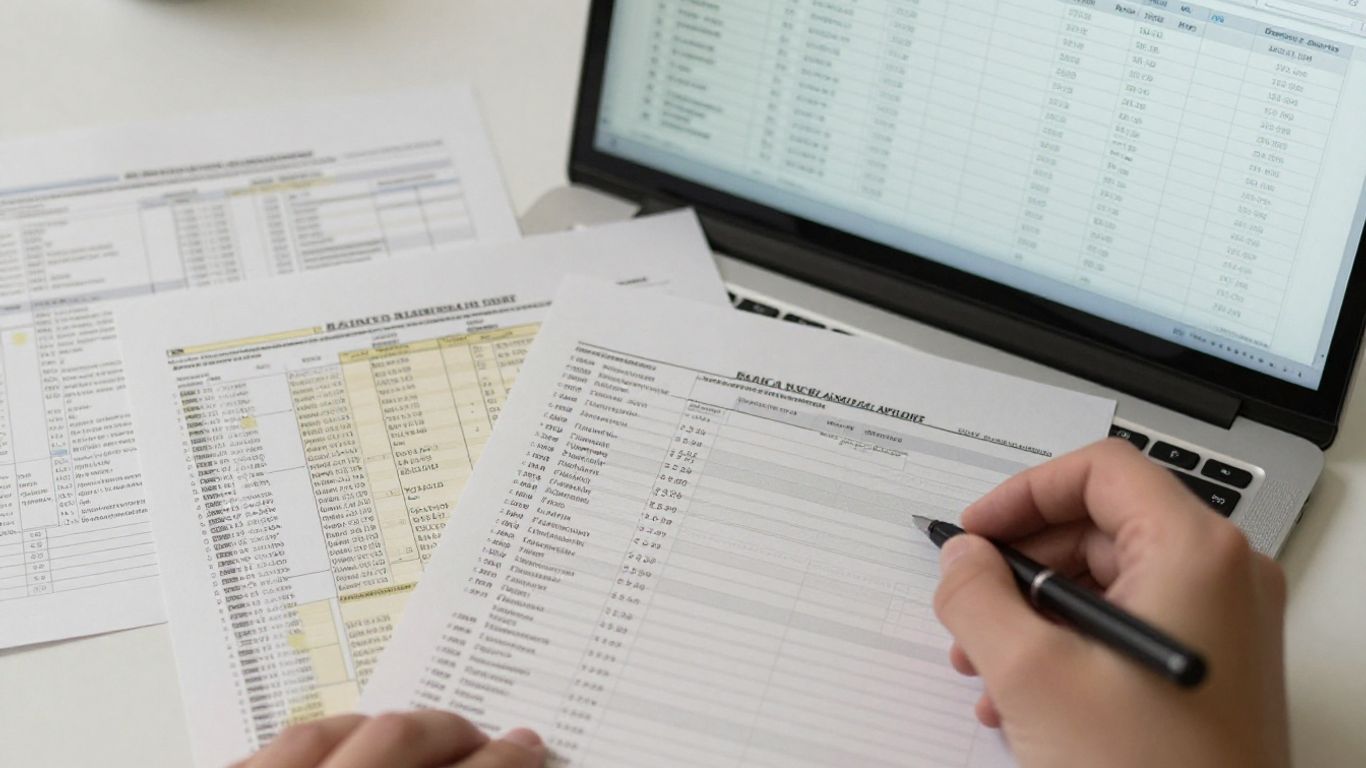
A dataset can support several stages of finance work, from turning static documents into structured records to evaluating tools that process them. The same statement may be useful for extraction testing, transaction classification, or reconciliation, but each purpose calls for different labels and quality checks. Know Your Bank Statement converts digital or scanned bank statement PDFs into structured Excel, CSV, or JSON files with transaction fields such as dates, descriptions, debits, credits, and balances.
Document extraction and transaction categorization
For extraction work, a dataset can help you assess whether transaction rows and their fields are captured accurately across different statement designs. Categorization tasks add another layer: you may label transactions by a chosen category scheme, while keeping the original description and amount available for review. Keep extracted values distinct from assigned categories so that errors in reading a document are not confused with errors in classification.
Financial research and model development
Researchers and analysts may use structured statement data to examine cash-flow patterns or develop and evaluate models. The dataset needs to reflect the limits of its source: a narrow set of institutions, account types, or time periods may not represent broader populations. For model evaluation, hold out documents or account histories that the model did not see during development, and document the dataset’s scope so results are interpreted appropriately.
Reconciliation, reporting, and workflow automation
For operational work, structured transactions can be compared with ledger entries, organized for reporting, or passed into a downstream finance process. A PDF-to-CSV guide explains why reviewing dates, currencies, and numbers matters before importing a converted file. Know Your Bank Statement uses an upload, automated extraction, review, and download workflow, which can reduce reliance on manual retyping while leaving the extracted data available for checking.
Where to find suitable data
The right source depends on your intended use, the level of realism you need, and the permissions attached to the documents. Public examples may help you explore formats, while synthetic files can support development without using real account histories. For production research or regulated work, you may need access to licensed data with documented rights and appropriate safeguards.
Public research datasets and repositories
Public repositories can be a useful place to discover sample data, but check the documentation and current availability before building a workflow around a dataset. For example, this public bank statement dataset page describes an Indian statement dataset and notes an issue with the dataset viewer; verify its present status, schema, license, and suitability before use. A public listing alone does not establish that the underlying documents can be reused for every purpose.
Synthetic statements for development and testing
Synthetic statements can provide controlled examples for testing parsing, OCR, or evaluation logic without exposing genuine customer records. Their usefulness depends on how well they reproduce the visual and structural variation your system will encounter; overly tidy examples can conceal real-world failure modes. This synthetic evaluation tutorial describes a workflow that pairs generated statement PDFs with answer labels, a useful pattern when you need test documents and known expected values together.
When licensed or proprietary data may be necessary
If public and synthetic data do not cover the layouts, time periods, or transaction patterns your work requires, a licensed or internally authorized source may be necessary. Confirm the permitted uses, retention rules, and any restrictions on sharing derived data before collection begins. Keep source documents and permission records connected so you can audit where each sample came from and why it was included.
How to build a reliable dataset
A reliable dataset is designed around a defined task, not simply accumulated over time. Decide what each document and transaction should contribute, then use consistent collection and annotation practices. The goal is to make samples useful for development and evaluation without allowing near-duplicates or hidden document clues to inflate performance.

Define the task and required labels
Write down the target output before gathering documents. An extraction dataset may need field-level values and locations, while a categorization dataset may need transaction labels and category definitions. Specify how to represent missing, ambiguous, or unreadable values; those cases are part of the task, not noise to silently discard.
Collect diverse statement samples
Build a sample pool that reflects the kinds of statements your intended workflow will encounter. Variation may include layout, page count, text-based versus scanned documents, and the way balances or debit and credit values are presented. As you collect, track document provenance and permission status, and avoid treating many pages from a single statement as independent examples.
Annotate fields and transactions consistently
Annotation rules should tell reviewers how to handle wrapped descriptions, multi-line transactions, sign conventions, and dates that appear in more than one form. A short written guide and a shared set of edge-case examples can reduce disagreements between annotators. For a manageable review cycle, organize checks around a few recurring decisions:
- Confirm that each transaction is represented once, including rows continued across lines or pages.
- Record debit and credit direction using the same convention throughout the dataset.
- Mark unreadable or absent fields explicitly instead of guessing their values.
- Compare a sample of annotations with the original PDF and resolve disagreements using the written rules.
These checks make the labels more reproducible and help reveal unclear instructions early. If reviewers keep resolving the same edge case differently, update the annotation guide before processing the next batch.
Split data to prevent leakage between samples
Separate training, validation, and test data with care. If pages from one statement—or related statements from the same account and period—appear in both training and test sets, repeated patterns can make evaluation look stronger than it is. Group related documents before splitting, and reserve the test set until you are ready to measure performance on unseen material.
How to prepare PDFs for analysis
Preparation affects both what can be extracted and how confidently the result can be checked. Preserve the original PDFs, note their document type, and use a repeatable process to turn pages into structured records. Know Your Bank Statement supports digital and scanned PDFs through parsing and OCR, with Excel, CSV, and JSON as available output formats.
Extract embedded text and tables
For text-based PDFs, inspect the embedded text and table structure before choosing an extraction approach. A PDF may contain selectable text without storing its transactions as a clean table, so columns can still shift or descriptions can run across lines. If you plan to work in CSV, this PDF-to-CSV conversion guide explains field mapping and verification considerations; always check the output against the statement rather than assuming visual alignment survived conversion.
OCR scanned statements and verify results
Scanned pages need OCR to turn image content into searchable text, but recognized characters can be wrong, especially in small print or crowded columns. Review a sample of OCR output against the original page, focusing on dates, decimal points, signs, and account totals. When a value is uncertain, keep it flagged for review instead of letting an unverified guess flow into later analysis.
Normalize dates, amounts, currencies, and descriptions
Normalization makes records easier to compare, but it should preserve the source value or a traceable link to it. Choose a consistent date representation, keep currency information where relevant, and define how debit and credit amounts are stored. Normalize descriptions cautiously: trimming excess spaces may help, while removing meaningful references can make reconciliation harder.
How to evaluate dataset quality and protect privacy
Dataset quality includes more than whether a file opens or a row parses. You need to know whether important fields are present, whether labels match the source, and whether the sample pool represents the layouts your intended workflow will encounter. Privacy should be built into collection, storage, review, and sharing rather than added as a final cleanup step.
Measure completeness, accuracy, and layout diversity
Measure completeness by checking how often required fields are present, and measure accuracy by comparing extracted or annotated values with the source statements. Review totals and transaction sequences where possible, since a missing row can affect downstream calculations even when individual rows look plausible. Also track layout diversity, so a high score on many similar documents does not hide weak performance on less common formats.
Check extraction performance across statement types
Break evaluation results down by relevant document groups, such as scanned versus text-based PDFs or statements with different transaction layouts. This helps you find systematic issues that an overall average might obscure. Know Your Bank Statement provides a privacy-focused process designed for repeatable finance operations; extraction quality still depends on the quality and layout of the statement, so review remains part of a dependable workflow.
Remove or mask sensitive personal and financial information
Bank statements can contain names, account identifiers, addresses, balances, and detailed transaction histories. Collect only what the task requires, restrict access to the files, and define retention and deletion practices before the dataset is used. If you create masked samples for sharing, check that the removed details cannot be recovered from other visible fields or document metadata.
Conclusion
A useful bank statement PDF dataset starts with a clear purpose and a schema that fits it, then grows through varied samples, consistent annotation, careful evaluation, and privacy safeguards. Treat each extracted value as something to verify against its source, and your dataset will be far more dependable for research, model testing, reconciliation, or reporting.
Frequently Asked Questions
What is a bank statement PDF dataset?
It is a collection of bank statement PDF documents, often paired with extracted fields, transaction records, or labels that make the documents usable for analysis or evaluation.
What fields should a bank statement dataset include?
Common fields include transaction date, description, debit or credit amount, and balance. Choose fields according to the task, and record how missing or unclear values are handled.
Can scanned bank statements be included?
Yes. Scanned statements can be included when OCR is part of the preparation workflow and recognized values are checked against the original pages.
Where can I find public bank statement data?
Research repositories and public dataset platforms may list statement-related data. Check the current files, documentation, licensing, and limitations before using any dataset.
Are synthetic bank statements useful for testing?
They can be useful for development and controlled evaluation, especially when expected answers are available. Test data should still reflect the layouts and irregularities relevant to the intended use.
How do I prevent data leakage when splitting a dataset?
Group pages and related statements from the same source or account before creating training, validation, and test sets. This reduces the chance that closely related examples appear on both sides of an evaluation.
How should I protect privacy in a statement dataset?
Limit collection to necessary information, control access, set retention rules, and mask sensitive details when appropriate. Review both visible page content and document metadata before sharing samples.